
27 November 2025
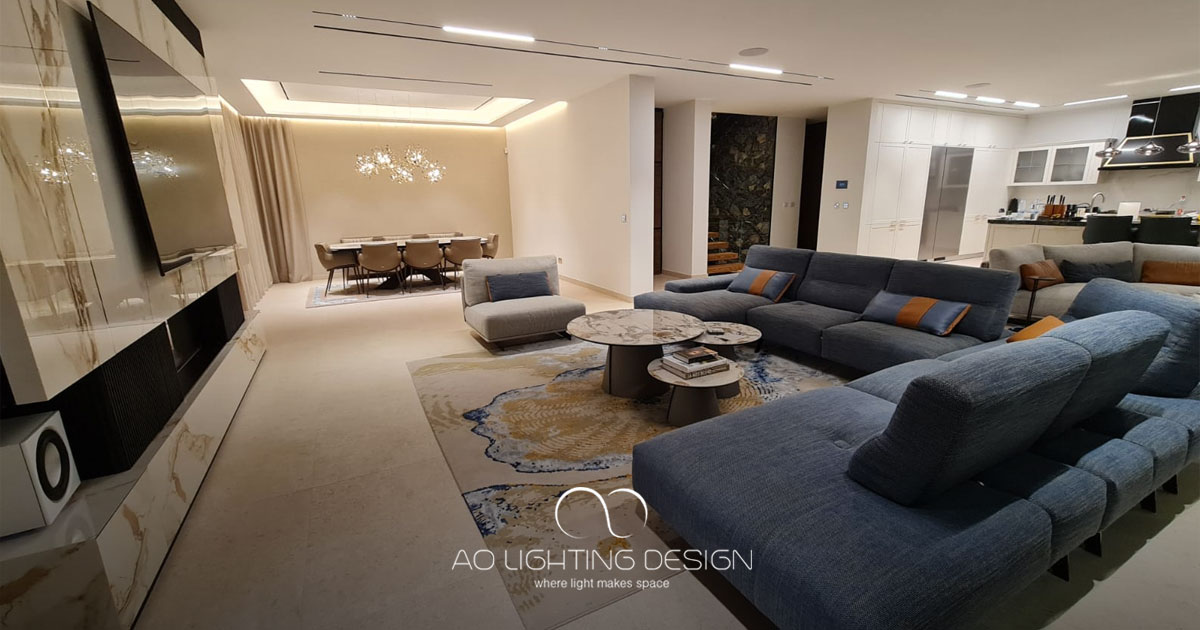
A new perspective on sustainability
In today’s contemporary design landscape, sustainability has become a shared language among architects, interior designers, and manufacturers. Lighting has also embraced this transition, evolving from a purely technical element to a tool for wellbeing and environmental identity.
Today, discussing sustainable architectural materials also means considering lighting solutions: from luminaires to diffusers, and the finishes that characterize every space. Light becomes an integral component of an ecological home, combining energy efficiency, visual comfort, and responsible beauty.
AO interprets this vision with a bespoke approach to residential lighting design, developing solutions that merge technology and sustainable materials, design and durability.
Contents
- The evolution of residential lighting design
- Sustainable materials in the lighting sector
- The impact of materials on light quality
- How to choose lighting based on sustainable furnishing materials
- Materials and light: secondary residential examples
- Technological choices for sustainable light fixtures
- Smart integration and automation
- The added value of conscious lighting for an ecological home
- AO and sustainable lighting: technology, aesthetics, and responsibility
- Conclusion
- The evolution of residential lighting design
Residential lighting design has undergone a true revolution: it is no longer just about “illuminating,” but about creating atmosphere, enhancing materials, and reducing energy consumption.
Innovation today operates on three levels:
- Technological: next-generation LED systems, smart controls, integrated home automation.
- Environmental: use of eco-friendly materials and low-impact production methods.
- Emotional: lighting that enhances quality of life and psychological wellbeing.
Within this scenario, AO provides integrated consulting and design services, focusing on sustainable and customized lighting for every type of residential environment.
- Sustainable materials in the lighting sector
Eco-friendly materials are no longer a niche choice—they are the new standard in contemporary lighting. Key solutions include:
- Recycled aluminum and brass: lightweight, durable, infinitely recyclable; ideal for structures and diffusers.
- Bio-based and recycled plastics: innovative alternatives derived from organic waste or post-consumer recovery.
- Recycled glass and natural opal diffusers: enable soft and even light distribution while reducing energy consumption.
- FSC or PEFC-certified wood: used for decorative elements with natural and non-toxic finishes.
- Water-based paints: reduce VOC emissions and improve indoor air quality.
These materials are selected not only for their environmental benefits but also for their optical performance. Each surface, glossy-satin-porous-translucent, interacts with light in a unique way, directly influencing visual and emotional results.
AO promotes an approach where materials and light are designed together, achieving an optimal balance between aesthetics, comfort, and sustainability.
- The impact of materials on light quality
Every material shapes light differently. Understanding these dynamics is essential to achieve maximum visual and luminous performance.
- Metal surfaces: reflect light directly, ideal for dynamic and modern spaces.
- Glass and opal diffusers: soften and evenly distribute light.
- Natural wood and porous finishes: absorb part of the luminous flux, creating warmth and visual comfort.
- Light and reflective materials: enhance perceived brightness and reduce energy demand.
In residential lighting design, AO analyses how every material interacts with light, optimizing output and reducing glare or dispersion. The result is efficient and harmonious lighting designed for living, not just for illuminating.
- How to choose lighting based on sustainable furnishing materials
In modern homes, where wood, glass, and natural fabrics are key elements, the choice of lighting plays a crucial role. Key guidelines include:
Natural wood and organic materials
Prioritize warm color temperatures (2700–3000 K) to preserve the material’s natural warmth. Luminaires in recycled aluminum or natural finishes reinforce environmental coherence.
Glass, ceramic, or metal
Glossy or reflective surfaces require more neutral lighting (3500–4000 K) and opal diffusers to avoid unwanted glare. An excellent choice: recycled glass lamps with adjustable intensity.
Natural fabrics and soft materials
Ideal for relaxing spaces. Lighting should be soft and diffused, preferably indirect, to create a sense of “luminous comfort.” AO recommends lamps with biopolymer or rice paper shades, with minimal environmental impact.
Smart control systems
Intelligent management enables lighting to adjust based on daily activities and natural light levels. Sensors and dimmers limit consumption while enhancing the ecological home philosophy.
- Materials and light: secondary residential examples
In residential projects, materials such as wood, bamboo, glass, or steel guide lighting choices:
- Parquet flooring or bamboo furnishings benefit from warm indirect lighting that highlights natural grain.
- Glass and glossy surfaces support linear lighting or adjustable spotlights to create depth and dynamism.
- Steel and metallic materials require adaptable lighting to prevent glare and highlight architectural details.
These principles, applied even in secondary residential contexts, offer valuable insight for commercial or outdoor projects, demonstrating how material choice shapes the type, placement, and intensity of light.
- Technological choices for sustainable light fixtures
Technology is essential in modern lighting design. Recycled aluminum, stainless steel, eco-polymers, and tempered glass ensure durability and weather resistance, minimizing maintenance and preserving performance over time.
High-efficiency LED solutions and custom optics ensure optimal luminous output, reducing energy use and enabling precise control. Modular and integrated systems enhance pathways, façades, urban furniture, gardens, and diverse environments, without compromising sustainability.
These technological decisions are not merely functional: they are design tools that express creativity, enhance materials, and shape spaces in harmony with the architectural vision.
- Smart integration and automation
Smart systems and automation introduce an additional layer of flexibility and efficiency. Lighting can adjust automatically based on environmental conditions, occupancy, or predefined scenarios, optimizing consumption and comfort.
Motion sensors, programmable timers, and remote control via apps or centralized systems allow customization for each project’s requirements.
This automation enables dynamic lighting environments that transform outdoor spaces into safe, functional, and emotional settings, enhancing the usability of plazas, courtyards, corporate gardens, and retail areas while maintaining sustainability.
AO integrates these smart technologies in residential and professional projects, making every space more efficient, comfortable, and aligned with ecological living principles.
- The added value of conscious lighting for an ecological home
A carefully designed sustainable lighting plan can drastically reduce energy consumption and improve environmental comfort. But the value goes beyond savings:
- The right lighting enhances materials and extends their lifespan.
- It creates visual balance, reducing stress and fatigue.
- It supports an aesthetic aligned with contemporary living values.
With strong technical expertise, AO guides architects and clients in selecting suitable products, evaluating every detail: color rendering, efficiency, color temperature, and material sustainability. Each project becomes a narrative of conscious lighting design in which aesthetics and responsibility coexist.
- AO and sustainable lighting: technology, aesthetics, and responsibility
AO stands out for its ability to integrate sustainability into the core of lighting design. This approach is based on three pillars:
- Advanced LED technology. High-efficiency sources with lifespans exceeding 50,000 hours and minimal heat dispersion, integrated with smart control systems to optimize usage.
- Eco-compatible materials and processes. Partnerships with suppliers using recycled materials, clean production, and sustainable packaging. Attention to full product life cycle—from design to reuse.
- Ethical and custom design. Every project is tailored: AO translates values of efficiency, aesthetics, and sustainability into unique lighting solutions. Light becomes part of residential wellbeing, delivering both perceived and tangible value.
AO does not simply “provide lighting”, it transforms light into an experience, guiding clients toward a new sustainable way of living.
- Conclusion
Innovation in architecture also begins with light. Sustainable materials, combined with a thoughtful and technologically advanced design approach, define the identity of the ecological home: efficient, welcoming, intelligent.
AO contributes to this evolution by delivering services that unite design, technology, and real sustainability. Each project becomes a tangible example of how light can enhance quality of life while respecting the environment.
Discover AO’s tailored sustainable lighting solutions. Illuminate your space responsibly—with eco-compatible materials, innovative technology, and design that makes a difference. Contact us to explore our projects and find out how to make your space more efficient, welcoming, and radiant.

Every project is an ongoing dialogue between creative vision and technical expertise, designed to bring to life lighting experiences that are coherent, sustainable, and impactful. If you’re developing a project and are looking for a partner who combines design, technology, and architectural sensitivity, contact us: the right light can change everything.
Latest articles
Smart Home and design: integrating technology and architecture
Smart Home and design as a strategic driver of spatial experiences In recent years, within the concept of smart home design, technology is no longer an accessory element but an integrated layer within architectural design, capable of influencing perception, behavior, and spatial performance …
Sustainable design solutions for commercial buildings
The strategic role of lighting design in green commercial architecture. Sustainable design and commercial spaces In recent years, the concept of sustainable building design has undergone a profound evolution. It is no longer solely about reducing energy consumption or complying with environmental regulations …
Designing Green Urban Spaces: The Role of Landscape Architecture in the City of Tomorrow
Why Urban Green Spaces Are Essential Today’s cities face complex challenges: population growth, densification, traffic, climate change, and pressure on public spaces. In this context, urban green spaces represent far more than an aesthetic element …