
27 November 2025
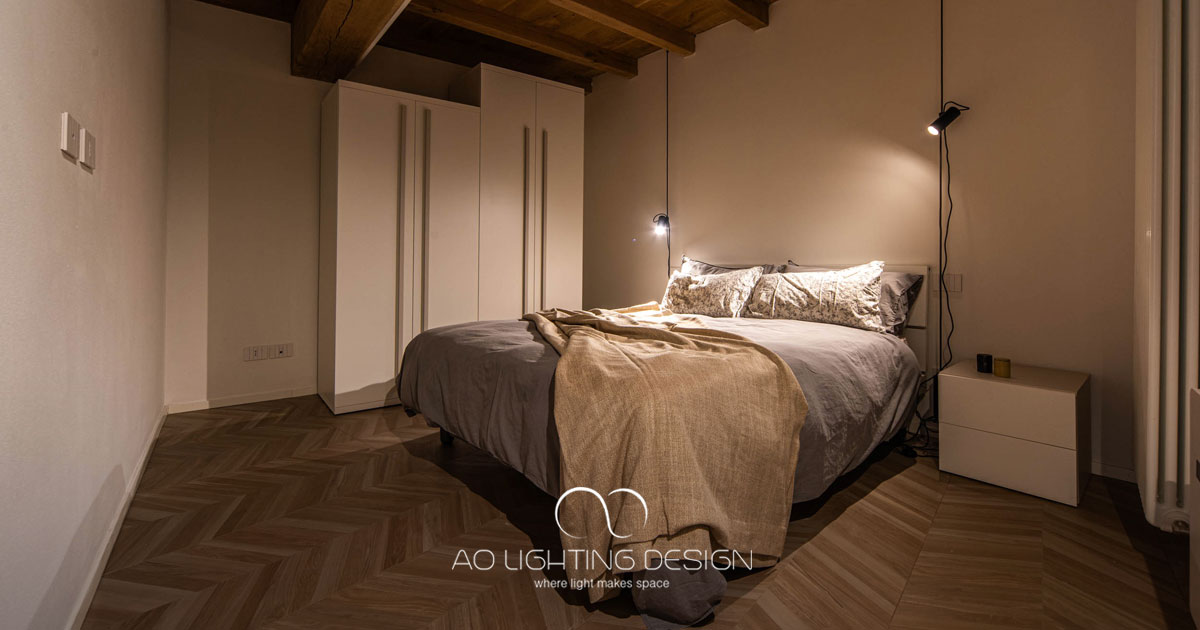
The potential of compact spaces
In recent years, the design of small-scale environments has taken on an increasingly central role in contemporary minimal interior design. The urban real estate market is moving toward compact solutions, where the challenge lies in combining aesthetics and functionality without sacrificing comfort and stylistic identity. Enhancing small spaces does not only mean furnishing with intention, but adopting an integrated design vision in which architecture, lighting, and technology work together to generate harmonious, elegant, and high-performing environments.
It is precisely in this context that professional lighting design becomes essential: light becomes a strategic tool capable of redefining volumes, creating depth, and improving the living experience.
Index
- Strategic lighting: the key to expanding perception
- Conscious minimalism: fewer elements, higher quality
- Color palettes and materials: guiding the eye
- Smart functionality: transformable furniture and integrated solutions
- Enhancing height and perspectives
- Technology, home automation, and light control
- The importance of professional lighting design
- Conclusions
- Strategic lighting: the key to expanding perception
When working with limited surfaces, lighting cannot be considered a simple accessory. A coherent distribution of light sources, both direct and indirect, makes it possible to amplify the perception of the space and dynamically modulate atmospheres.
A well-conceived lighting design project integrates different levels of light:
• Diffused general lighting, to achieve uniformity and a sense of spaciousness
• Accent lighting, to highlight architectural or decorative elements
• Functional lighting, dedicated to daily activities such as reading, cooking, or working
• Scenic lighting, to characterize the space and generate emotion
The selection of light fixtures with essential forms, integrated into the architecture, prevents visual clutter and interference. Concealed profiles, LED strips in niches and recessed spotlights are perfect solutions for minimal contexts and reduced dimensions.
- Conscious minimalism: fewer elements, higher quality
Furnishing small spaces requires a selective and carefully targeted choice of elements. Minimalist design is not merely an aesthetic trend, but a design methodology aimed at eliminating the superfluous to enhance what truly matters.
Contemporary minimalism is based on three fundamental principles:
• Reduction of visual disorder, favoring clean surfaces and balanced compositions
• Superior material quality, to convey personality without overwhelming
• Visual continuity, useful for creating a fluid and harmonious space
Often, the difference is not made by the quantity of objects but by their coordinated scenic presence, also through a consistent lighting plan that supports shapes without interfering.
- Color palettes and materials: guiding the eye
A thoughtfully designed color palette, greatly contributes to the perception of space. Light and natural tones encourage brightness and lightness, while calibrated use of darker colors can create depth and visual hierarchy.
Some technical suggestions:
• Light-colored walls amplify reflected light
• Continuity of flooring throughout all rooms reduces visual segmentation
• Textured surfaces such as light woods, natural stone, and satin metals add character without
weighing down
• Grazing light on textured materials creates light plays that enhance three-dimensionality
Once again, light becomes a powerful ally: a balanced combination of color temperatures can influence perceived comfort and spaciousness.
- Smart functionality: transformable furniture and integrated solutions
When every square meter counts, multifunctionality becomes a strategic asset. Custom-designed and transformable furniture makes it possible to adapt spaces to different moments of the day, maintaining order and fluidity.
Effective examples:
• Bookcases and wall units with integrated LED lighting
• Extendable or foldaway tables
• Storage beds, poufs with internal compartments, paneling that conceals technical wardrobes
• Compact kitchens with vertical modules and integrated lighting inside cabinets
Intelligent planning of the electrical and lighting layout, during the design phase avoids invasive future interventions and ensures maximum efficiency.
- Enhancing height and perspectives
In small environments, there is often a tendency to think exclusively in horizontal terms, but taking advantage of verticality is a decisive strategy to gain space and improve overall harmony. Uplighting with indirect light, for example, creates a sense of higher ceilings and greater visual openness.
Solutions to consider:
• Backlit shelves
• Adjustable spotlights that follow architectural lines
• Cove lighting that conceals LED strips
• Lightweight mezzanines with effective lighting
Proper management of perspectives guides the eye toward focal points, transforming compact spaces into evocative environments rich in personality.
- Technology, home automation, and light control
Light regulation through dimming systems and home automation, makes it possible to personalize the living experience based on the time of day and specific activities. The ability to set different lighting scenarios improves spatial flexibility, especially when multiple functions overlap.
Examples of useful scenarios:
• Daylight boost: intense, uniform light for work activities
• Relax: warm tones and soft accents for quiet moments
• Hospitality: accent lighting to welcome guests or create atmosphere
Integrating these tools from the start enables full control and more efficient energy management.
- The importance of professional lighting design
Achieving high-quality results in compact spaces requires a multidisciplinary vision and transversal skills capable of connecting aesthetics, technical performance, and operational management. Within this integrated approach lies the distinctive value of AO, lighting designers with over 20 years of experience in commercial, hospitality, residential, and landscape sectors.
AO collaborates with architects, landscapers, real estate developers, builders, and private clients, developing tailor-made solutions and managing every stage of the process: from concept definition to the selection of light fixtures, to on-site electrical layout planning and operational support for installation and commissioning.
Their technical expertise also enables them to recommend the most efficient solutions for dimming and automation, ensuring system compatibility and maximum energy performance, as well as the ability to create custom scenarios for multifunctional environments.
Relying on specialized professionals means achieving:
• A lighting project designed to enhance the space without waste
• Direct coordination with architects and contractors during execution
• A refined aesthetic vision consistent with minimal, contemporary design
• A final result that is elegant, functional, and technically impeccable
- Conclusions
Small spaces tell big stories. They are places where every detail matters, where nothing is left to chance and every design choice becomes a conscious gesture. Transforming compact environments into welcoming, harmonious, and functional spaces does not mean adapting to a lack of square meters, but recognizing the hidden possibilities behind every corner, every perspective, every ray of light.
Lighting design plays a fundamental role in this creative journey: it is light that reveals the true nature of space, creates depth, shapes atmospheres, and brings warmth and identity. Well-orchestrated lighting can transform an ordinary environment into an extraordinary place, capable of surprising those who live it every day and those who visit for the first time.
Collaboration with specialized professionals such as AO makes all the difference at this very point: they not only design light, they build visions. With over 20 years of experience and a strong ability to collaborate with architects, landscapers, companies and private clients, AO accompanies every project throughout its entire development—from concept to construction site—as well as the technical definition of systems. The result is a bespoke project, tailored to real needs and to the identity of each space, where aesthetics and functionality coexist without compromise.
When dealing with compact surfaces, precision becomes essential: every centimeter counts, every choice has an impact, every solution must be intelligent. Home automation and lighting control systems enable dynamic scenarios, adaptable to daily rhythms and multifunctional environments. It is in this harmony between design, technology, and innovation that small spaces find their true strength.
Ultimately, what makes a space extraordinary is not its size, but the emotion it is able to convey. With conscious design and an integrated vision, even the smallest room can become a luminous refuge, a place to live and share, a frame that enhances everyday life.
Small spaces do not ask for less: they ask for more. More attention, more expertise, more creativity. And when these qualities meet light, anything becomes possible. If you have a project to develop and would like our support, our team is at your disposal. For further details, get in touch. We look forward to hearing from you.

Every project is an ongoing dialogue between creative vision and technical expertise, designed to bring to life lighting experiences that are coherent, sustainable, and impactful. If you’re developing a project and are looking for a partner who combines design, technology, and architectural sensitivity, contact us: the right light can change everything.
Latest articles
Smart Home and design: integrating technology and architecture
Smart Home and design as a strategic driver of spatial experiences In recent years, within the concept of smart home design, technology is no longer an accessory element but an integrated layer within architectural design, capable of influencing perception, behavior, and spatial performance …
Sustainable design solutions for commercial buildings
The strategic role of lighting design in green commercial architecture. Sustainable design and commercial spaces In recent years, the concept of sustainable building design has undergone a profound evolution. It is no longer solely about reducing energy consumption or complying with environmental regulations …
Designing Green Urban Spaces: The Role of Landscape Architecture in the City of Tomorrow
Why Urban Green Spaces Are Essential Today’s cities face complex challenges: population growth, densification, traffic, climate change, and pressure on public spaces. In this context, urban green spaces represent far more than an aesthetic element …