
19 February 2026
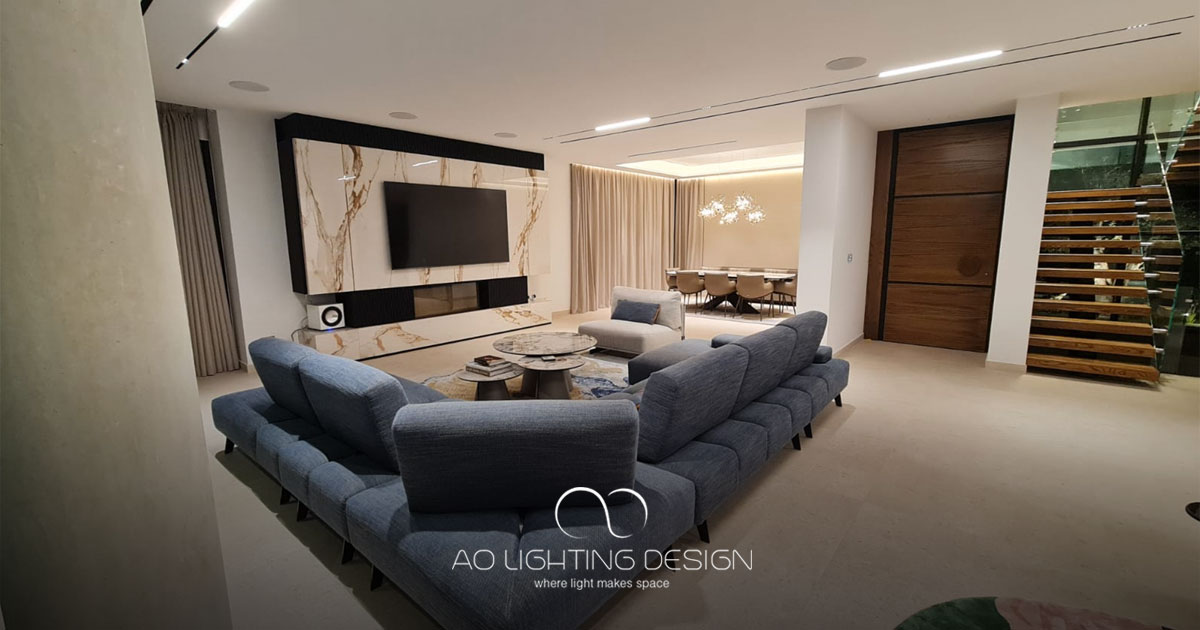
Smart Home and design as a strategic driver of spatial experiences
In recent years, within the concept of smart home design, technology is no longer an accessory element but an integrated layer within architectural design, capable of influencing perception, behavior, and spatial performance.
In this context, home automation in architecture is not only about system automation, but about creating intelligent ecosystems where light, materials, layout, work synergistically.
AO operates as a strategic partner in this process, intervening vertically on light, atmosphere, and sustainability, collaborating with architecture and interior design studios to translate design visions into measurable spatial experiences.
Indice
- Smart home design: beyond technology, towards experience
- Home automation and architecture: the role of light in integrated design
- Lighting design as a strategic layer of smart architecture
- Smart home design and architecture: when technology becomes part of spatial design
- Integration between light and automation
- Sustainability and energy efficiency in architectural home automation
- AO as a strategic partner in smart projects
- Conclusions: towards people-centered intelligent architecture
- Smart home design: beyond technology, towards experience
The term smart home design is often associated with IoT devices, voice systems, and home automation. However, in the professional context of architecture and spatial design, the concept is broader and more strategic.
Smart design means:
- designing spaces that respond to people
- adapting light and environment based on behavior
- optimizing comfort, productivity, and engagement
- reducing consumption and environmental impact
Technology therefore becomes a tool to build dynamic experiences, not just to control functions.
- Home automation and architecture: the role of light in integrated design
Home automation and architecture cannot be addressed without considering lighting design as the primary sensory infrastructure of space.
Light:
- defines spatial perception
- guides human behavior
- influences psychophysical well-being
- directly impacts energy consumption
In a smart project, lighting must be integrated from the earliest concept stages, not as a decorative element but as a strategic and data-driven system.
- Lighting design as a strategic layer of smart architecture
AO positions itself as a lighting design partner for architects, interior designers, and brands, providing strategic and design consultancy on:
- dynamic lighting scenarios
- integration with intelligent control systems
- perceptual space design
- measurement of light’s impact on performance and behavior
- sustainability and energy efficiency
Light becomes a digital and physical layer that interacts with home automation and architecture, creating adaptive environments.
- Smart home design and architecture: when technology becomes part of spatial design
In the contemporary context, smart home design is no longer limited to integrating technological devices within the home, but represents a design approach in which technology becomes an integrated layer of architecture. In this vision, home automation in architecture is configured as an invisible system that supports spatial quality, comfort, and sustainability of the built environment.
Intelligent architecture emerges when light, materials, layout, and digital systems are designed synergistically from the earliest concept phases. In this scenario, light becomes a functional element and a sensory infrastructure capable of interacting with technology and spatial identity.
For AO, lighting design represents the connection point between architecture and smart technology. The integration of advanced control systems, dynamic scenarios, and sensors enables environments to be transformed into adaptive ecosystems, capable of responding to people’s needs and optimizing energy performance.
Designing smart architecture therefore requires an interdisciplinary approach, where lighting design becomes a driver for spatial experience, well-being, and efficiency. AO works as a vertical partner on this layer, collaborating with architects and interior designers to translate design visions into intelligent, sustainable, and future-oriented environments.
- Integration between light and automation
The integration between light and automation systems represents one of the most advanced aspects of smart home design applied to contemporary architecture. Through intelligent control platforms, light can dynamically adapt to environmental conditions, human activities, and circadian cycles, improving comfort, well-being, and spatial performance.
Within the context of architectural home automation, lighting design becomes an intelligent infrastructure: programmable scenarios, occupancy sensors, and daylight harvesting enable optimization of spatial experience and reduction of energy consumption. AO intervenes on this layer by designing integrated lighting systems that interact with architecture and support sustainability, efficiency, and project identity objectives.
- Sustainability and energy efficiency in architectural home automation
Sustainability is a central driver in contemporary design. Smart systems enable:
- monitoring and reducing energy consumption
- optimizing the use of natural light
- integrating occupancy sensors and daylight harvesting
- supporting environmental certifications (LEED, BREEAM, WELL)
AO integrates strategic lighting consultancy with ESG objectives, contributing to:
- reduction of carbon footprint
- responsible spatial design
- optimization of operational costs
Smart home design thus becomes a framework for designing responsible and future-proof spaces.
- AO as a strategic partner in smart projects
AO is not a traditional architecture studio, but a strategic vertical partner focused on light.
AO’s value in the smart architecture context includes:
- strategic consultancy on how light influences behavior and performance
- lighting design for architecture and interiors
- integration between technology, architecture, and brand identity
- a data-driven and experience-oriented approach
- focus on innovation, sustainability, and energy efficiency
In an architectural home automation project, AO works synergistically with architects, engineers, and brands to ensure that light is designed as a strategic infrastructure of space.
- Conclusions: towards people-centered intelligent architectureThe future of smart home design and architectural home automation is not only technological, but deeply human.
True smart architecture is the one that:
- puts people at the center
- creates memorable experiences
- improves well-being
- supports business objectives
- reduces environmental impact
In this scenario, lighting design represents the bridge between technology, architecture, and perception. AO positions itself as a strategic partner to transform light into a driver of innovation, performance, and identity, contributing to the design of intelligent, sustainable, and experience-oriented spaces.

Ogni progetto è un dialogo continuo tra visione creativa e competenza tecnica, per dare vita a esperienze luminose coerenti, sostenibili e di impatto. Se stai sviluppando un progetto e desideri un partner che unisca design, tecnologia e sensibilità architettonica, contattaci: la luce giusta può cambiare tutto.
Articoli recenti
Sustainable design solutions for commercial buildings
The strategic role of lighting design in green commercial architecture. Sustainable design and commercial spaces In recent years, the concept of sustainable building design has undergone a profound evolution. It is no longer solely about reducing energy consumption or complying with environmental regulations …
Designing Green Urban Spaces: The Role of Landscape Architecture in the City of Tomorrow
Why Urban Green Spaces Are Essential Today’s cities face complex challenges: population growth, densification, traffic, climate change, and pressure on public spaces. In this context, urban green spaces represent far more than an aesthetic element …

AO at LiGHT Expo London 2025: Illuminating with Vision, Technology and Sustainability
The LiGHT Expo 2025 took place on November 19–20, 2025, offering two days entirely dedicated to innovation in the art of lighting design.The event was held at the Business Design Centre in Islington, London, a landmark venue for design and architecture...